

"The Truth": A Solo UE5 Cinematic Diary (And the Pipeline That Made It Possible)
In 2003, for the first time, I witnessed the glory of a Blizzard cinematic — Illidan Stormrage, brooding about how the entire world had "betrayed him." I was 15. It was, without question, the coolest thing I'd ever seen — and for years I couldn't stop wondering how people made something like that. As a young adult, I jumped into this industry the first chance I got, working at an animation studio for six years. I made live-action films and videos in my free time too, but I always came back to those cinematics, wondering if there'd ever be a technology that would let ME make something like that.
In 2022, I was finishing my film "Visions of the Storm," and I felt it needed an extra intro scene — something that would grip the viewer in the first minute. We didn't want to add another production day; the whole project had already taken nine years at that point. So I looked toward Unreal Engine 5, which was showing off its new Nanite feature — real-time rendering of ultra-high-resolution meshes. From a classic 3D pipeline perspective, that was a genuine breakthrough. I ran tests using assets we'd already modeled and rigged, and I was so impressed by UE5 that I built an entire minute intro scene for the film in a matter of weeks.

That's when something clicked. For the first time in twenty years, making a full CG cinematic no longer felt like a fantasy. It was real.
I should be upfront: English isn't my first language, so my sense of poetry is definitely shaped by that. Writing Victorian-era gothic horror while sipping kefir in Moldova was, let's say, a slightly absurd experience. But I gathered up whatever media literacy I had and wove together a narrative: a man in search of forbidden knowledge, descending into madness — literally and metaphorically — as he bears witness to a cosmic horror. The poem went through several revisions once I started storyboarding and realized it needed a proper three-act structure. Some sections could've been shorter, but stretching them out and letting the dread breathe felt right for the story.
A foul idea sticks like a leech.
It poisons your soul.
A borrowing itch
You cannot control.
I love space. I love horror. And I love the idea of an unrelenting, unforgiving universe that's completely indifferent to our existence — it's one of those concepts that “tickles my brain”. Lovecraft rarely describes these things directly. Instead, he shows what happens when people "stare into the abyss" for too long. I wanted to take the same approach: keep it simple, and let the audience's imagination do the heavy lifting, because the descent into madness is far more interesting than the madness itself. (It also keeps the budget reasonable, he-he)


Later that year, I traveled to the US. Like most people visiting New York for the first time, I completely fell for it and it sparked my imagination. I knew UE5 cinematics have limits — they can look a little wooden — so since I can't really fully avoid that, I figured the film needed some extra flavor. I used to write poetry as a teenager (heartbroken-love-poem poetry, DUH!), and I thought I could channel that into something creative. Lovecraft and Edgar Allan Poe felt like a perfect match for a narration that could carry the whole film. It would create artistic value, where people are prone to look at cinematics with a built-in grain of salt.


When I direct, I always think hard about the resources I actually have — not the resources I wish I had. You have to be realistic. I knew I'd used up all my "favor credits" on my previous film; so many people helped with "Visions of the Storm" for next to nothing that I couldn't ask again. On top of that, I'd recently parted ways with a producer I'd worked with for years, and it hit me hard — I went through a genuinely difficult stretch where I couldn't even think about directing again. Looking back, I think this film became my way of finding that motivation again. So from the early planning stages, I already knew: this film would be made alone, at least until I had something solid enough to show people.
Searching for a Pipeline


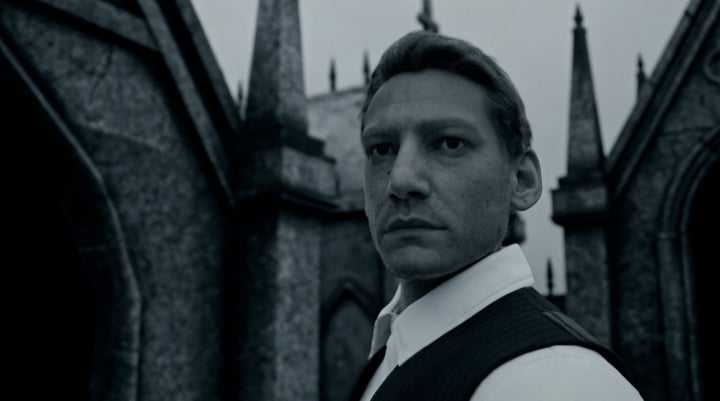
I settled on three scenes, three locations, three acts: The Library, The Cave, and The Portal. I started with stick-figure storyboards and some early character render tests to see if the whole thing was even viable. The storyboarding went fine. The renders did not. No matter how much time I poured in, my main character looked like a sad leprosy-ridden leprechaun. And remember — I still had a day job through all of this, so those late-night sessions were rough. Eventually I paused the whole project to regroup and wait for the spark to come back.


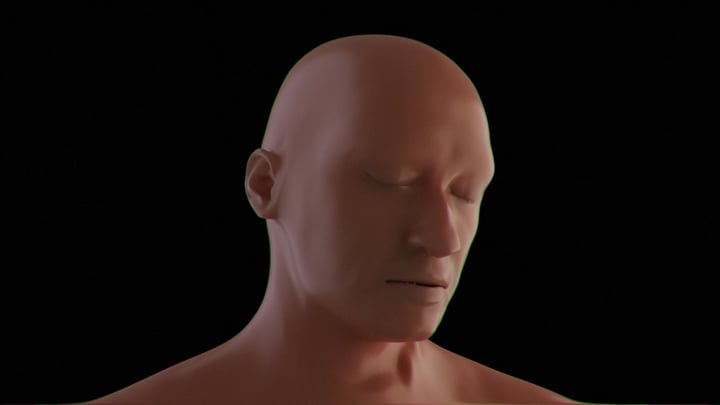


About a year later, MetaHuman was all over the internet. People on YouTube were suddenly producing genuinely impressive results. The animation was still a bit stiff, but I figured I could direct around that. After a few tests, it blew my previous attempt out of the water. With Unreal's built-in facial capture and accessible markerless motion capture, for the first time I genuinely felt this film was possible. I finally decided to try building the first scene — The Library — inside Unreal.


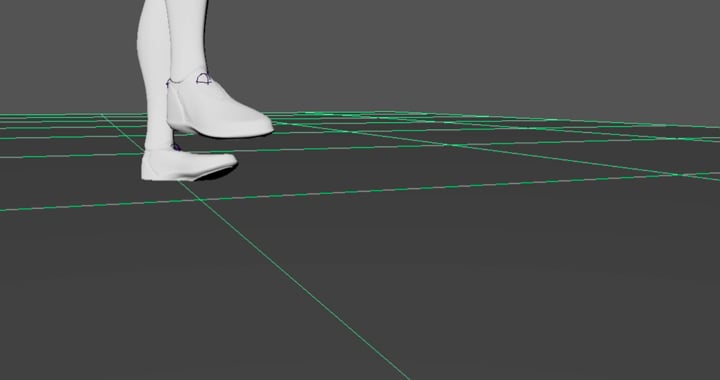
I'd previously tested several markerless mocap services on a commercial project, and QuickMagic gave the best results by far. It’s not magic — sliding feet, occasional ninjutsu hand signs — but it gave me a foundation, and more importantly, confidence that this was a wall I could actually climb. (Though I still want a couple of Rokoko suits for Christmas).

Next: face capture. The obvious move was buying a Rokoko helmet, but I was seriously lacking a budget, so I tried the DIY route instead. It failed spectacularly — the result was almost unusable, and fixing it would've become its own side-project, which isn't something you can afford when you're doing everything alone. After some soulsearching, I found “facemotioncapture.com”, who build genuinely solid capture helmets on a real budget. Jackpot. I dusted off spectacular acting skills, did the take, and had my foundation: QuickMagic plus a budget face rig. Flimsy, but real.
Since I was building everything in Unreal, I also had access to the FAB marketplace — an essential resource for any solo artist. I spent my spare time hunting for assets and scenes I could repurpose. I eventually found a library scene that was nearly perfect, spent a day or two poking it with a stick, and got my first real shot. It looked fantastic. Yet again I became obsessed with this project. This was January 2025.
Production begins.
I’ve spent the next month assembling the first act. Unreal's instant relighting and rendering kept up that creative high alive. Most of the work from this period, aside from small animation fixes, came together on the first pass.
Sixteen shots done!
First pass!
I couldn't believe it!
A personal record for a project that had, up to that point, mostly punished me!
By this point, Act 1 and parts of Acts 2 and 3 populated my edit, and I felt ready to reach out to a voice actor. I can't recommend Fiverr enough for this — there's real talent there. I found Mike Porter, who immediately understood the tone I was going for, even through my prepubescent sounding test VO. His deep, unsettling voice elevated the edit instantly.
Work got busy after that and other projects took priority — but here's a bit of a lifehack, or maybe just cosmic coincidence: around the same time, the studio I work with landed a major UE project, and I jumped at the chance to be part of it. I picked up a ton of tricks from industry veterans. Was it luck, or was it the universe rewarding the fact that I was already deep in this project? I still don’t know. But sometimes life hands you useful curveballs — and I always try to slot in paid work that prepares me for my next passion-project. There's an old saying: if you can't walk toward your goal, at least lay there facing it.
In April 2025, I came back to the film ready to go bigger for Act 3. I knew it needed a real crescendo here, and that meant music and sound had to carry serious weight. I found a British composer on YouTube — Daniel Garavini — and his track "Faceless Beast" was exactly the tone I needed. Music always shapes how I direct. The combination of that roaring, booming sound with Mike's voice created exactly the mix of awe and despair I needed. Now I just had to live up to it in the visual department, no pressure.


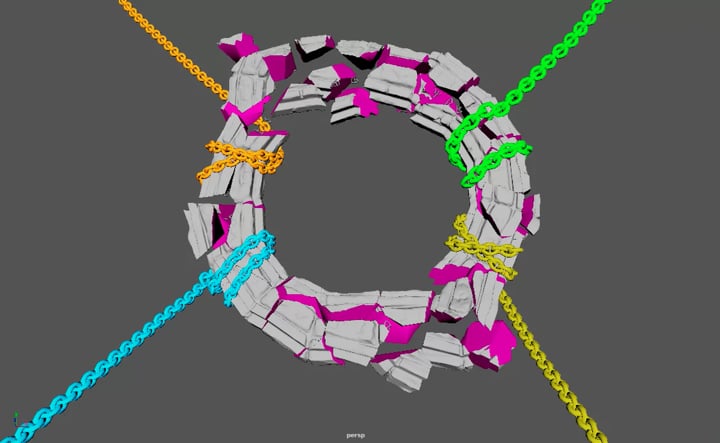
I started thinking about the "money shot" — the image I hoped people would remember after the credits rolled — and landed on the portal. I poured every ounce of my limited resources into it. The portal itself had to be a fully custom asset, built with a classic CG pipeline. On the surface, it's just floating rocks — but I put real effort into making it feel monumental: worn down, nearly collapsing, until the character reaches out and it erupts with enough force to shake the world.
The portal effect itself took more work. The cave has a cold cyan tint, like we're deep in the bowels of the earth. The portal, as a gateway to somewhere cosmic and incomprehensible, needed to feel “wrong” by comparison — so I went with purple, which both complements the cyan and reads as visually unnatural. Smoke simulations can be brutal technically, so I turned to EmberGen, a GPU-based smoke and fire simulation tool. Running on GPU saved me weeks. I exported everything as a VDB volume, and Unreal handled the simulation in real time, right in the sequencer. Being able to adjust camera, lighting, animation, and color on the fly — and get a full 4K render in minutes — is an incredible thing for a solo artist.
I wanted the portal semi-suspended, bound by massive metal chains — partly for visual drama, partly as a piece of unspoken storytelling. Why are these rocks chained up in this godforsaken cave? What power do they hold? The chains create a composition that pulls your eye directly toward the empty portal, demanding attention: something is waiting here. A bit of wind simulation on top added some dynamic movement, and the chains were done.




I'd be lying if I said this pipeline had no downsides. Animation quality was the big one. Markerless mocap, especially built on unconventional reference footage (can't get more unconventional than my acting), isn't production-ready out of the box — I spent enormous amounts of time polishing nearly every animation, and sometimes just redid shots from scratch. So should you even use something like QuickMagic? I still say yes — even if you don't use the raw output directly, it's an excellent 3D reference, especially as a guide for the weight and physicality of the performance.
What Didn't Work (Because Something Never Does)
This is where Cascadeur saved me. I'm not an animator by any stretch, but Cascadeur is intuitive enough that it feels like cheating. Its physics system smooths out a huge amount of inaccuracy automatically. The workflow takes some getting used to, but once it clicks, it saves enormous time and headache. Could a dedicated animator have done better? Probably. But they don't grow on trees.
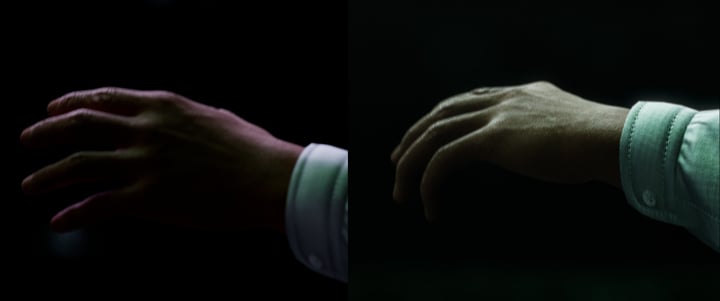
Rendering brought its own headaches, especially the tight depth-of-field shots. I never found a clean native way to do this in Unreal with Nanite — so my workaround was rendering nearly everything on separate layers. Take a hand close-up: no matter what console overrides I tried, I got an ugly sharp rim around the edges. The fix was rendering the background separately and doing a holdout pass on the hand — which gave me full flexibility in compositing and the soft edges I needed. Problem solved, at least for my case, since a lot of my shots lean into shallow DOF and extreme close-ups — the cinematography here needed to feel personal, almost uncomfortably so.
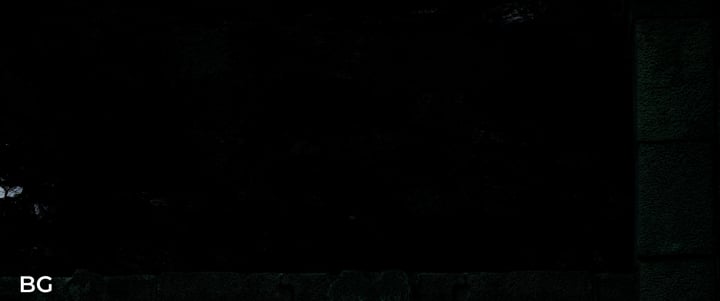
The open field in Act 2 gave me a different kind of trouble. My asset combination refused to cooperate with Path Tracing, which is what most environment artists would reach for here. For reasons I never fully solved, Unreal just wouldn't comply — I read more forum posts during those weeks than books in the last several years combined. The result works, but I faked more in those shots than I'm comfortable admitting, and eventually I had to just stop tweaking and move on. This is one of those cursed truths every director and CG artist knows: you see your own mistakes forever, long after everyone else has stopped noticing.
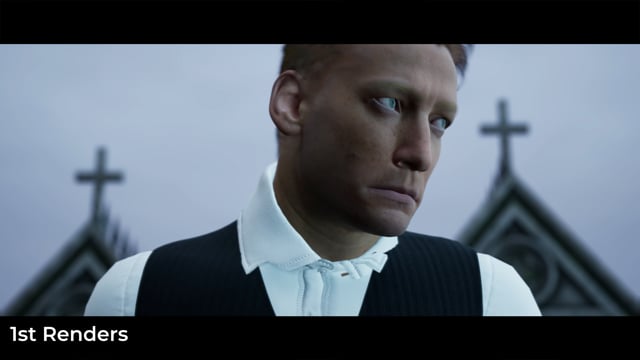
By this time my pipeline had mostly settled:


What remained was the unglamorous part nobody puts in a showreel: polishing, bug-fixing, and slowly losing my mind over small glitches nobody else would ever notice.


The AI Question
It would be strange not to address this directly: why not just use generative AI for the whole thing? I use these tools in commercial work pretty often — for textures, background elements, quick tests and occasional trauma dumping. I even ran some experiments with tools like Seedance and Kling, and the results were promising... But I kept running into a wall: control. I don't like rolling dice on timing, framing, or how a character looks into the distance — that's directing, and it's the part I actually care about, that’s the part that’s fun. If a shot looks “bad”, it'll be my “bad”. In the era of perfectly effective AI shots, everything tends to look the same across the board, I tried to avoid that in this project, even though the end product might suffer visually.
Calling in Reinforcements
I reached out to a sound designer I'd worked with on multiple past projects, but he was too busy. He recommended one of his students instead, and that person agreed to help with both the remaining score and the sound design. Meanwhile, I kept polishing visuals — weeks of re-rendering and re-compositing — and started eyeing festivals. I really wanted a Halloween-season premiere, which meant tight deadlines, but I built out a schedule and figured I was just barely going to make it.
Once the rough cut was mostly in place, I started "looking for allies." First was "Faceless Beast" — by this point I was so attached to it in the edit that I couldn't imagine the film without it, which is a genuinely dangerous trap for any editor or director to fall into. To my enormous luck, Daniel actually took the time to respond and license the track for the film. That gave me a huge confidence boost — and honestly, it saved the project.


A few weeks later, I got the bad news: the sound designer bailed. He said he didn't like anything he'd made — so much so that he refused to share even a few seconds of it with me. I still don't fully know what happened there. What I did know was that I was about to miss a lot of deadlines.
So I did something completely out of character and posted on Reddit (insane, right?), describing the situation and begging for help. I'm a pretty shy person, so this was a real departure — but the response was almost immediate. People actually answered! Complete strangers who “liked the vibes”! Insane! Caitlin Reilly and Jesse Bowling stepped up and covered everything the film still needed. Working with them genuinely elevated the project. In the end, I missed about seven festival deadlines — but I got to work with people whose contributions made the film better.
Looking back
I still can't quite believe I managed to finish something like this as a solo production. So much work and stubbornness went into it — there were stretches where I hated how it looked, then loved it, then hated it again the next week. Some days I genuinely asked myself if it was worth pouring this much time and money into a non-commercial passion project with such a narrow audience.


Because of that emotional whiplash, I usually give myself a break after finishing a project — I stop rewatching it obsessively for a while. I spend that time researching festivals, building out materials, and writing things like this instead. Then, eventually, without really planning to, I'll pull out my phone (the way Nolan intended it), hit play, and watch the whole thing again like it's the first time.
“Damn. I finally made the kind of cinematic fifteen-year-old me dreamed about.”
Whether anyone else feels the same way is out of my hands. But I know he'd be proud.